Z.O.E.
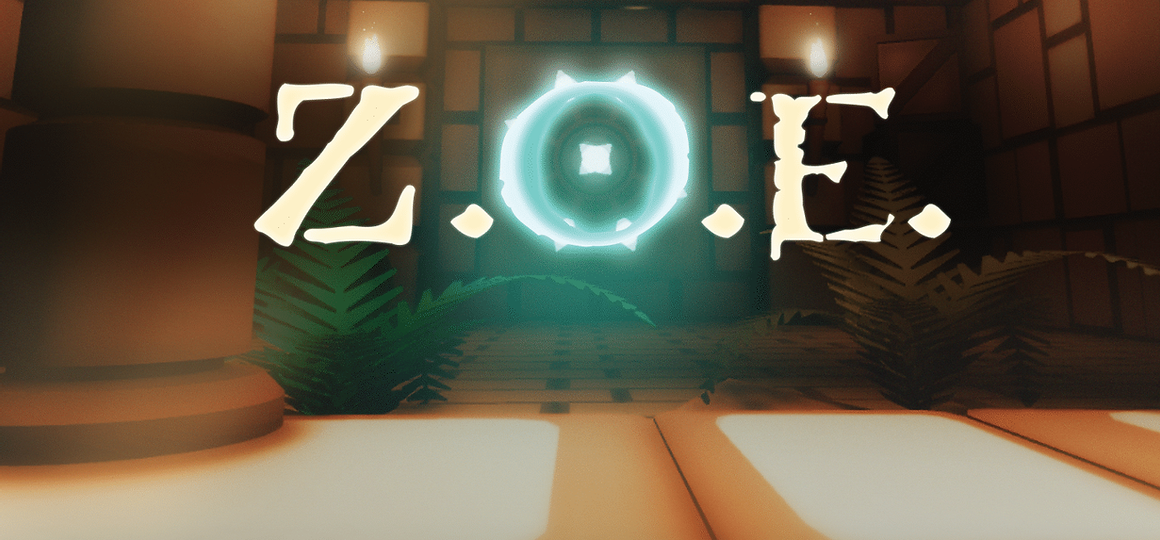
In Z.O.E. the player is in control of several robots which they need to use in various ways to solve puzzles. The capabilities of the robots are simple, but were designed to create a whole that is far more complex than the sum of its parts. The robots have grid-based movement, they can use other robots as stairs, they can self-destruct to launch other nearby robots great distances and they can sacrifice themselves by stepping down into water, thus creating a bridge to grant other robots safe passage.
I initially worked on the system that manages the robots lifecycle, which robots are active and which are inactive as well as checkpoint functionality. However, halfway through the alpha phase, we reassigned the workloads among the programmers so that I became responsible for the grid-based movement. The reason was that as the deadline for the end of the alpha phase approached, it became clear that the movement system wouldn’t be implemented in time unless we changed our approach, and since I was the most experienced with implementing pathfinding, we decided to put me on the task. As my implementation and subsequent bugfixing of the grid-based movement neared completion, I gradually transitioned to helping the other programmers on the team, with finalizing their implementations and with bugfixing, through pair-programming.
 Lorem ipsum dolor sit amet, consectetur adipiscing elit, sed do eiusmod tempor incididunt ut labore et dolore magna aliqua. Ut enim ad minim veniam, quis nostrud exercitation ullamco laboris nisi ut aliquip ex ea commodo consequat. Duis aute irure dolor in reprehenderit in voluptate velit esse cillum dolore eu fugiat nulla pariatur. Excepteur sint occaecat cupidatat non proident, sunt in culpa qui officia deserunt mollit anim id est laborum.
my other test note